Are Hot Springs Safe? Risks, Safe Temperatures & How to Soak Safely
Hot springs are mostly safe if you treat them like the untreated, sometimes scalding water they are. Here is what the real risks are, from bacteria and the brain-eating amoeba to overheating, pregnancy and blood pressure, and the simple rules that prevent nearly all of them.
By the HotSpringsFind editorial team · Updated October 2026 · General safety information, not medical advice
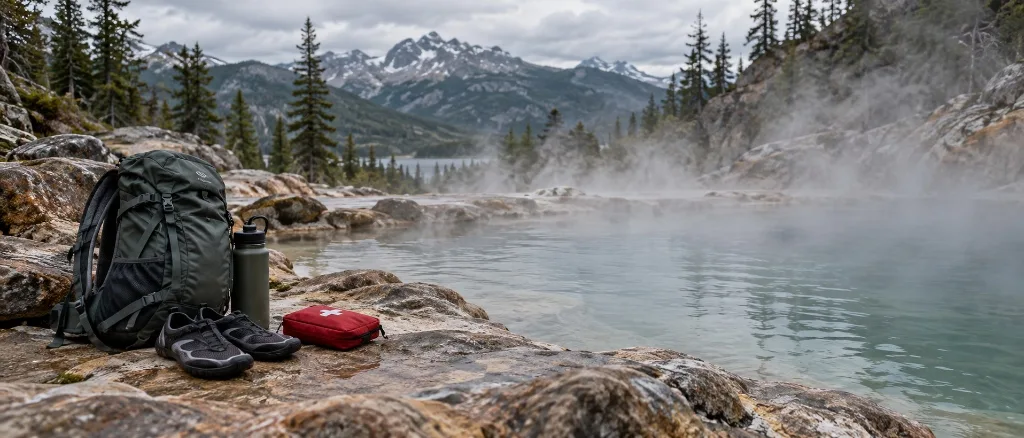
Are hot springs safe? The short answer
Yes, for most healthy adults who follow a few rules. Nearly every serious hot spring injury comes from one of four things: water that is too hot, putting your head under, staying in too long, or stepping into a geothermal feature that was never a soaking pool.
- Keep your head above water. This one rule prevents the rare but deadly amoeba infection.
- Test before you enter. Use a thermometer or a cautious hand. Stay at or below about 104°F.
- Limit soaks to 15–20 minutes, or 10–15 at 103–104°F, and drink water between dips.
- Never enter thermal basins. Springs in places like Yellowstone can be near boiling under a thin crust.
- Check with a doctor first if you are pregnant or have heart disease or poorly controlled blood pressure.
How hot is too hot? Safe hot spring temperatures
Hot spring source water ranges from barely warm to boiling. Some vents emerge well above 140°F (60°C), and features in active volcanic areas can be superheated. The pool you soak in is usually cooled by mixing with creek water, by flowing over rock, or by an operator. Always test it yourself, because a pool that was fine last week can change after a storm or a shifted rock wall.
Is 104°F too hot? It is the upper limit, not a target. US hot tub safety guidance caps water at 104°F, and the same logic applies to natural pools. For reference, our directory lists a reported soak temperature for every spring. Browse the hot springs temperature statistics to see how most pools cluster between 98°F and 104°F.
Do hot springs have bacteria?
Yes. Natural hot springs are not chlorinated, and heat does not sterilize them. Water between roughly 80°F and 115°F is ideal for many microbes. The organisms that matter most:
- Naegleria fowleri is the brain-eating amoeba. It is very rare but nearly always fatal, and it infects only through the nose. See the section below.
- Pseudomonas causes "hot tub rash," an itchy, bumpy skin infection that shows up a day or two after soaking in poorly flushed warm water.
- Legionella can cause a serious pneumonia when you breathe in contaminated mist. The risk is highest in enclosed or indoor pools and steamy bathhouses.
- Gut germs such as E. coli, norovirus and Cryptosporidium spread in crowded, stagnant pools, mainly when people swallow the water.
Lower-risk choices: flow-through pools with a constant stream of fresh source water, clear water with no scum or algae, and uncrowded times. Developed resorts that drain or treat their pools add another layer of protection. Don't swallow the water, keep open cuts out of it, and shower when you are done.
Brain-eating amoeba in hot springs: how real is the risk?
Naegleria fowleri lives in warm freshwater, including natural hot springs. It causes primary amoebic meningoencephalitis (PAM), which is fatal in nearly every case. The risk is very small, though: the US records only a handful of infections in a typical year. You also cannot get it from swallowing water. The amoeba has to travel up the nose.
How to prevent it
- Keep your head above water, with no dunking, diving or floating on your back with your ears under.
- Don't jump or splash in. Forceful entry pushes water up the nose.
- Avoid stirring up sediment. The amoeba lives in bottom mud and debris.
- Consider nose clips in very warm primitive rock tubs.
Hot springs and high blood pressure or heart conditions
Soaking widens your blood vessels (vasodilation). Your blood pressure can drop while your heart rate rises to shed heat. For people with well-controlled blood pressure this is usually fine in short, moderate soaks. For people with heart disease, poorly controlled hypertension, or medications that affect blood pressure, it is a reason to talk to a doctor first.
- Choose warm over very hot and keep soaks short.
- Skip the alcohol. It deepens the blood-pressure drop and speeds dehydration.
- Go easy on hot-to-cold plunges if you have a heart condition. The sudden switch strains the cardiovascular system.
- Stand up slowly. Blood pools in your legs after a hot soak, and fainting on wet rock is how many injuries happen.
Hot springs while pregnant, and with kids
Pregnancy: obstetric guidance advises against activities that raise your core temperature above about 102°F (39°C), especially in the first trimester, when overheating has been linked to neural-tube defects. That is why hot tubs and hot springs are generally discouraged in pregnancy. Ask your doctor or midwife. If they say yes, keep the water under about 100°F, keep your chest and shoulders out, keep it brief, and get out at the first sign of feeling hot or lightheaded.
Kids: smaller bodies heat up faster than adults'. Keep children in cooler pools, make soaks short, and keep their heads above water. Many resorts set minimum ages. Joyful Journey Hot Springs, for example, does not allow children under 4 in its pools.
How long should you stay in a hot spring?
Plan on about 15–20 minutes at 98–102°F or 10–15 minutes at 103–104°F, then sit out and cool down before going back in. You lose water through sweat even though you're submerged, and dehydration hits faster at altitude, where many western springs sit.
- Drink water before, between and after soaks.
- Get out immediately if you feel dizzy, nauseous, confused, or your heart is pounding.
- Don't soak alone in remote pools, and don't fall asleep in hot water.
Wilderness hazards beyond the water
- Thermal basins: in places like Yellowstone, the ground around hot springs can be a thin crust over scalding water. More than 20 people have died there from hot spring burns. Stay on boardwalks, and never soak in thermal features in national parks unless the site is designated for it.
- Gases: hydrogen sulfide (the rotten-egg smell) can build up in caves, pits and enclosed bathhouses. Leave if you get a headache or feel short of breath.
- Rivers and tides: riverside pools flood fast after rain or snowmelt, and coastal springs like Steep Ravine Hot Springs are only reachable in a narrow low-tide window.
- Remote access: expect no cell service. Download maps, tell someone your plan, and check our closed hot springs tracker before you drive.
Protecting the spring protects you too. Our Leave No Trace guide for hot springs covers soap, sunscreen and waste, all of which also feed the bacteria above.
Are hot springs good for you?
For most people a soak is relaxing and can ease sore muscles and stiff joints. Some mineral waters may help certain skin conditions, though the evidence is modest. Most benefits come from the heat and the rest itself, not from any particular mineral. Treat claims of cures with skepticism, and weigh them against the risks above.
Hot spring safety FAQ
Are hot springs safe to swim in?
Most are safe for a soak if you follow a few rules. Keep your head above water, test the temperature first, stay at or below about 104°F, limit soaks to 15–20 minutes, and drink water. Never enter features inside thermal basins like Yellowstone, where water can be near boiling under a thin crust.
Is 104°F too hot for a hot spring?
104°F is the generally accepted upper limit for soaking. US hot tub safety guidance caps water at 104°F. At that temperature keep soaks to about 10–15 minutes and cool off between dips. Anything above 104°F raises your core temperature quickly, and water above roughly 106°F should be avoided.
Do hot springs have bacteria?
Yes. Natural hot springs are untreated, and warm water around 80–115°F is ideal for many microbes, including Naegleria fowleri, Legionella and Pseudomonas. Flow-through pools with constant fresh water carry less risk than stagnant, crowded or muddy pools. Avoid swallowing the water and shower afterward.
Can you get a brain-eating amoeba from a hot spring?
It is possible but extremely rare. Naegleria fowleri causes only a handful of US infections a year, though nearly all are fatal. It can only infect you through the nose, so you cannot catch it by swallowing water. Keep your head above water, don’t jump in, and avoid stirring up bottom sediment.
Can you go in a hot spring while pregnant?
Talk to your doctor or midwife first. Obstetric guidance advises against raising your core temperature above about 102°F (39°C), especially in the first trimester, which is why hot tubs and hot springs are generally discouraged during pregnancy. If your provider says yes, keep it short, under about 100°F, with your chest out of the water.
Are hot springs safe with high blood pressure?
It depends on how well your blood pressure is controlled, so ask your doctor. Hot water widens blood vessels, which can drop your blood pressure while your heart rate climbs. Keep soaks short and warm rather than very hot, skip alcohol, avoid jumping straight into a cold plunge, and stand up slowly to prevent dizziness.
How long should you soak in a hot spring?
Soak for about 15–20 minutes at 98–102°F, or 10–15 minutes at 103–104°F, then get out and cool off. Leave right away if you feel dizzy, nauseous, or your heart is pounding.
Can hot springs make you sick?
They can. The most common problems are overheating and dehydration, followed by skin rashes ("hot tub rash" from Pseudomonas), stomach bugs from swallowing contaminated water, and, rarely, lung infections from breathing in mist in enclosed pools. Choose clear, flowing water, don’t swallow it, and shower afterward.
Looking for the town of Hot Springs, Arkansas instead? See hot springs in Arkansas.
Sources
- CDC — Naegleria fowleri (primary amoebic meningoencephalitis)
- CDC — What you can do to stay healthy in hot tubs
- National Park Service — Hot springs / geothermal features
- Yellowstone National Park — Safety in thermal areas
This guide is general safety information, not medical advice. If you have a health condition or are pregnant, ask your doctor before soaking.